Gastric sleeve surgery (sleeve gastrectomy) is one of the most effective and widely performed weight loss procedures in the world. However, successful long-term results depend not only on the operation itself but also on careful follow-up care. Regular blood tests after gastric sleeve surgery play a key role in monitoring your recovery, nutritional status, and overall health.
At Istanbul Obesity Center, we guide every patient through a structured follow-up program to ensure safe, healthy, and sustainable weight loss.
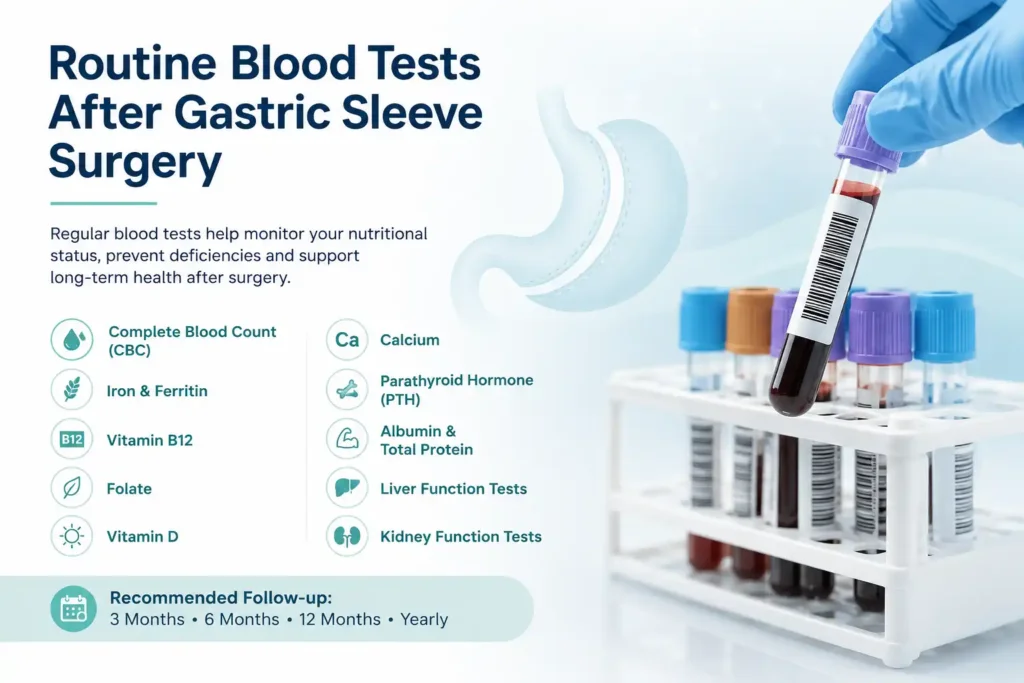
Why Are Blood Tests Important After Gastric Sleeve Surgery?
After a sleeve gastrectomy, the size of the stomach is significantly reduced. While this helps patients lose weight effectively, it also reduces food intake and can affect the absorption of certain vitamins and minerals over time.
Without regular monitoring, patients may gradually develop deficiencies in iron, vitamin B12, vitamin D, calcium, or protein — often before any symptoms appear. Routine blood tests allow your medical team to:
- Detect nutritional deficiencies at an early stage
- Adjust your supplement plan when needed
- Monitor liver, kidney, and metabolic health
- Support healthy, long-term weight loss
Which Blood Tests Should Be Checked Routinely?
1. Complete Blood Count (CBC)
A CBC checks for anaemia, signs of infection, and overall blood health. It is one of the most basic but essential tests in bariatric follow-up.
2. Iron Studies
This panel includes serum iron, ferritin, transferrin saturation, and TIBC. Iron deficiency is one of the most common issues after bariatric surgery, and these tests help detect it early — before it leads to anaemia and fatigue.
3. Vitamin B12
Reduced stomach size can affect B12 absorption. Low vitamin B12 levels may cause fatigue, weakness, and neurological symptoms such as numbness or tingling.
4. Folate
Folate supports red blood cell production. Monitoring folate levels helps prevent anaemia and supports overall metabolic health.
5. Vitamin D
Vitamin D is essential for bone health and long-term wellbeing. Deficiency is common after bariatric surgery and should be corrected with appropriate supplementation.
6. Calcium
Calcium levels should be monitored regularly, especially together with vitamin D, to protect bone density over the years following surgery.
7. Parathyroid Hormone (PTH)
PTH testing helps assess calcium balance and bone metabolism. An elevated PTH level can be an early sign that the body is not getting enough calcium or vitamin D.
8. Albumin and Total Protein
These tests evaluate your protein intake and overall nutritional status — a key factor for muscle preservation and healing after surgery.
9. Liver Function Tests
AST, ALT, GGT, bilirubin, and albumin are checked as part of the overall metabolic follow-up, since rapid weight loss can temporarily affect the liver.
10. Kidney Function Tests
Creatinine and urea levels are monitored for general health, hydration status, and kidney function.
How Often Should Blood Tests Be Done After Gastric Sleeve Surgery?
Routine blood tests are commonly recommended at the following intervals:
- 3 months after surgery
- 6 months after surgery
- 12 months after surgery
- Annually thereafter, for life
This schedule allows your medical team to track your progress closely during the first year — when nutritional changes are most significant — and to maintain long-term health afterwards.
Can the Follow-Up Plan Change?
Yes. The exact follow-up plan may vary depending on your medical history, current symptoms, laboratory results, and supplement use. Some patients may need more frequent testing, while others follow the standard schedule. Your bariatric team will personalise your plan accordingly.
Frequently Asked Questions (FAQ)
Do I need blood tests even if I feel fine after gastric sleeve surgery? Yes. Many vitamin and mineral deficiencies develop slowly and silently. Blood tests can detect problems long before symptoms appear.
Will I need to take supplements for life after gastric sleeve surgery? Most patients need long-term supplementation, particularly a multivitamin, vitamin B12, vitamin D, calcium, and sometimes iron. Your test results determine the exact plan.
Can I do my follow-up blood tests in my home country? Yes. If you travelled to Istanbul for surgery, follow-up tests can usually be done locally, and the results can be reviewed remotely by your bariatric team.
What happens if a deficiency is found? Deficiencies detected early are usually easy to correct with dietary adjustments and supplements. This is exactly why regular monitoring matters.
Long-Term Success Starts with Regular Follow-Up
Gastric sleeve surgery is a powerful tool for weight loss, but lasting success depends on ongoing care. Routine blood tests are a simple, effective way to protect your health and get the best possible results from your surgery.
Contact Istanbul Obesity Center today to learn more about our comprehensive bariatric surgery and follow-up programs.
This article is for informational purposes only and does not replace professional medical advice. Always consult your doctor regarding your individual follow-up plan.