IOC Editorial & Medical Information TeamPrepared with more than 22 years of bariatric-centre experience and checked against the official sources listed below. See our review process.
Instructions from your own surgical or prescribing team take priority over this general guide. Contact local emergency care for severe or rapidly worsening symptoms.
Key takeaways
- Swallowable and endoscopically placed balloons follow different placement and removal pathways.
- Neither option is automatically safer or more effective for every patient.
- A balloon works best as part of a structured nutrition, behaviour and follow-up programme.
How the two balloon pathways differ
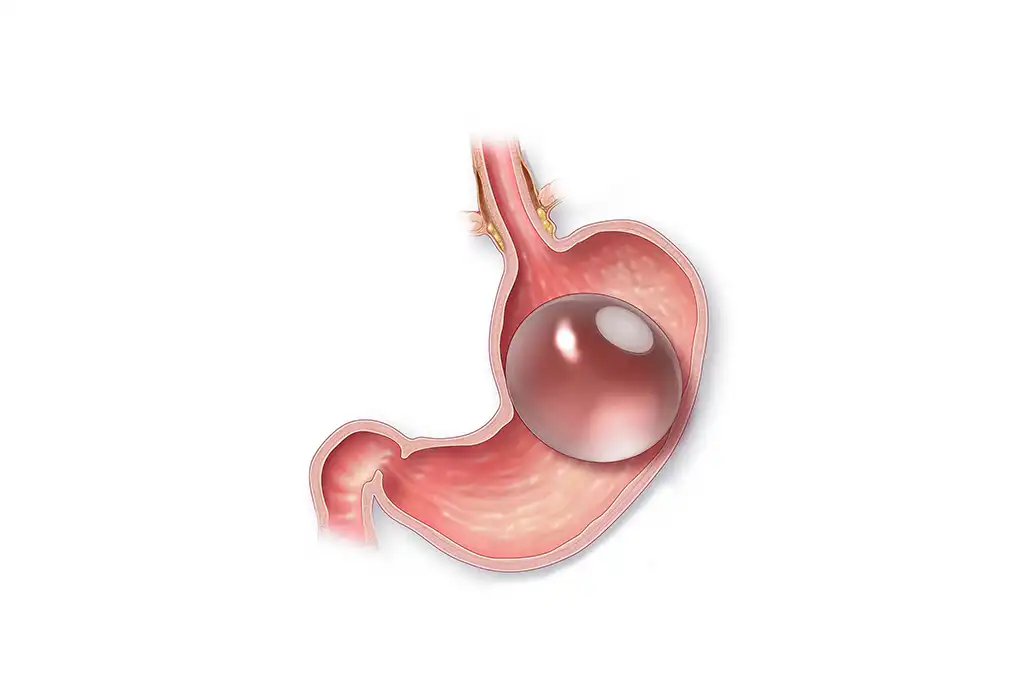
A swallowable balloon is taken as a capsule and filled after imaging confirms its position. It is designed to empty and pass naturally after a defined period. An endoscopic balloon is placed into the stomach through the mouth during an endoscopic procedure and is normally removed endoscopically at the planned time.
Specific brands, duration and removal arrangements vary. The exact device—not only the generic label—should be named in the consent discussion.
Suitability comes before convenience
Previous stomach or oesophageal surgery, swallowing problems, a large hiatus hernia, active ulcer disease, pregnancy, anticoagulants and other conditions may change eligibility. A clinician should review symptoms, medical history and medication before either option.
Avoid selecting a balloon solely because it is described as incision-free, sedation-free or removable. Those features do not answer whether it is appropriate for you.
Side effects and risks
Nausea, vomiting, cramping and reflux are common early effects with intragastric balloons. Less common but important problems can include dehydration, ulceration, balloon deflation or migration, obstruction and the need for early removal or intervention.
The swallowable pathway still needs access to endoscopy and emergency care if the device does not progress as expected or serious symptoms occur.
Effectiveness depends on the whole programme
Weight-loss figures vary by device, study and patient. Averages cannot predict an individual result. Engagement with nutrition, eating behaviour, activity and follow-up strongly influences whether weight lost during treatment is maintained after the balloon is gone.
Questions to ask the provider
Ask which exact balloon is proposed, why it suits your history, how long it remains, how progress is confirmed, which symptoms trigger urgent assessment and who can remove it if plans change.
- Is endoscopy available if urgently needed?
- What anti-sickness and hydration support is provided?
- How often will a dietitian review me?
- What is the plan after the balloon leaves or is removed?
Compare gastric balloon treatment
Review candidacy, risks, recovery, the hospital pathway and personalised quote process.
Open treatment pageFrequently asked questions
Does a swallowable gastric balloon need endoscopy?
Routine placement and planned passage may not, but endoscopy can still be required if there is a complication or the device does not pass as expected.
Which balloon causes less nausea?
Tolerance varies. Device design and medicines matter, but no provider can guarantee a symptom-free first week.
Can a gastric balloon replace bariatric surgery?
It is a different, temporary treatment. The appropriate pathway depends on BMI, related disease, goals, risk and follow-up needs.
Will weight return after balloon removal?
Regain is possible. The post-balloon nutrition, activity and medical plan is central to maintaining progress.
Sources
This article was checked against the following official clinical and regulatory sources at its latest update.
NICE — Swallowable gastric balloon capsuleNICE — Overweight and obesity management