Medically reviewed by a bariatric specialist | Updated April 2026 | 8 min read
The gastric sleeve plateau phase is one of the most common concerns after bariatric surgery. After initial rapid weight loss, most patients experience a period where the scale stops moving — and understanding why this happens is key to long-term success. In this guide, we explain what the gastric sleeve plateau phase is, when it occurs, and how to overcome it with evidence-based strategies.
Nearly every patient who undergoes gastric sleeve surgery will experience the plateau phase at some point. It is a normal stage of the post-operative journey, not a failure of the procedure or the patient.
What is the gastric sleeve plateau phase?
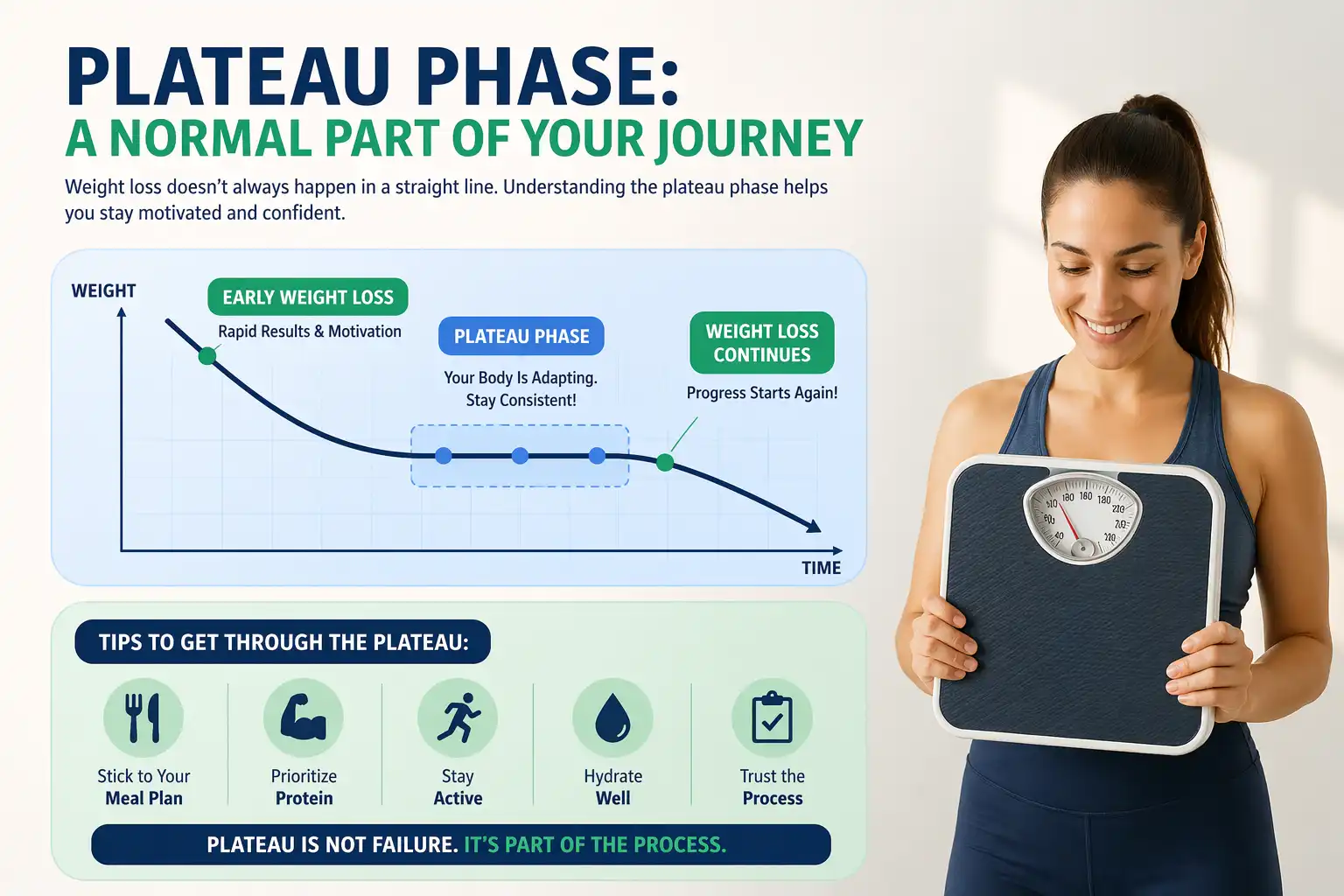
The gastric sleeve plateau phase refers to a period of stalled or significantly slowed weight loss that occurs after the initial rapid reduction following sleeve gastrectomy. Despite maintaining the same dietary and activity habits, the number on the scale stops moving — sometimes for weeks at a time.
This is not a sign that the surgery has stopped working. It is a predictable, physiological response to sustained caloric restriction and rapid body composition changes.
When does the gastric sleeve plateau phase typically occur?
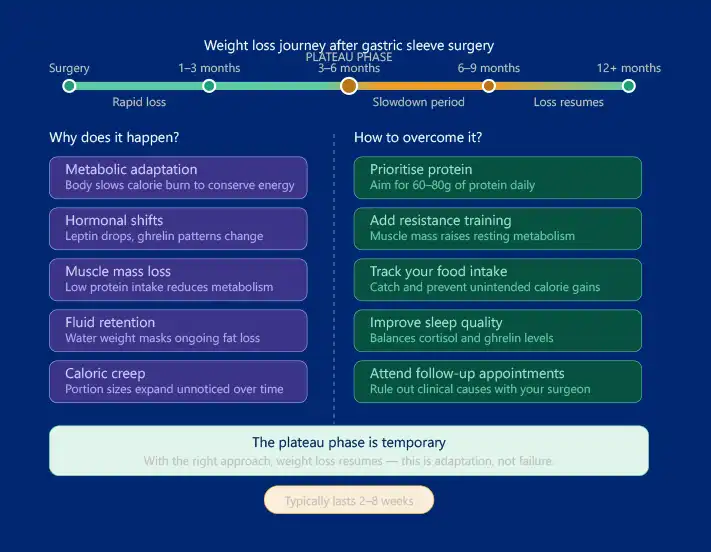
Most patients experience their first significant gastric sleeve plateau phase between three and six months post-surgery. A secondary plateau can occur around the 12–18 month mark as the body reaches a new metabolic equilibrium. Both are expected milestones, not setbacks.
- 3–6 months post-op — when the gastric sleeve plateau phase most commonly begins
- 2–8 weeks — how long the plateau typically lasts before weight loss resumes
- 60–70% of excess body weight — lost on average within the first year
Why does weight loss slow down during the plateau phase?
Several interconnected physiological mechanisms contribute to the gastric sleeve plateau phase:
- Metabolic adaptation — the body downregulates its resting metabolic rate in response to prolonged caloric deficit, a survival mechanism known as adaptive thermogenesis.
- Hormonal changes — levels of leptin (the satiety hormone) decrease while ghrelin patterns shift post-sleeve, altering hunger signals and energy balance.
- Muscle mass reduction — inadequate protein intake during rapid weight loss can cause lean muscle loss, further reducing the body’s calorie-burning capacity.
- Fluid retention — temporary water retention, often related to increased physical activity or hormonal fluctuations, can mask ongoing fat loss on the scale.
- Caloric creep — as the stomach gradually accommodates slightly larger portions, total caloric intake may slowly increase without the patient’s awareness.
How long does the gastric sleeve plateau phase last?
The duration of the gastric sleeve plateau phase varies considerably between individuals. Most plateaus resolve within two to eight weeks with no intervention. Some patients report plateaus extending two to three months, particularly those who experienced very rapid initial weight loss.
The length of the plateau is influenced by activity level, protein intake, hormonal factors, stress, and sleep quality — all modifiable variables that patients and their care teams can address.
How to overcome the gastric sleeve plateau phase: 7 proven strategies
- Prioritise protein at every meal — aim for 60–80g of protein daily to preserve lean muscle mass and maintain a higher metabolic rate.
- Reintroduce or intensify physical activity — resistance training in particular helps rebuild muscle, which raises resting metabolism over time.
- Track food intake accurately — use a food diary or app to identify unintentional caloric increases. Portion sizes can expand gradually post-sleeve.
- Eliminate liquid calories — protein shakes excluded, beverages such as juice, flavoured coffee drinks, and alcohol can silently stall progress.
- Optimise hydration — adequate water intake (1.5–2 litres daily) supports metabolism and reduces false hunger cues.
- Improve sleep quality — poor sleep elevates cortisol and ghrelin, both of which promote fat storage and increase appetite.
- Attend scheduled follow-up appointments — your bariatric team can identify clinical causes of prolonged stalling, such as nutritional deficiencies or thyroid issues.
When should you seek medical advice about the plateau phase?
The gastric sleeve plateau phase is not a clinical concern unless it is prolonged and unresponsive to lifestyle adjustments. If weight loss has been completely stalled for more than three months and dietary and lifestyle changes have made no difference, consult your bariatric surgeon or dietitian. Prolonged plateaus can occasionally indicate underlying hormonal or metabolic issues that require investigation.
Frequently asked questions about the gastric sleeve plateau phase
Is it possible to break the plateau phase without changing my diet?
Yes, in some cases. Adding or varying exercise — especially strength training — can stimulate metabolic adaptation without modifying caloric intake. However, a combined approach (dietary review plus increased activity) typically produces faster results.
Does the plateau phase mean my gastric sleeve has stretched?
Not necessarily. The gastric sleeve plateau phase is primarily metabolic, not anatomical. Sleeve dilation is possible over time but is not the primary cause of weight loss stalls in the early post-operative period.
Can stress cause the gastric sleeve plateau phase?
Yes. Elevated cortisol levels associated with chronic stress promote fat storage — particularly visceral fat — and can disrupt the progress of weight loss even when diet and exercise habits remain consistent.
Will I definitely lose weight again after the plateau phase?
For the vast majority of patients who adhere to post-operative guidelines, weight loss resumes after the gastric sleeve plateau phase. Long-term data consistently shows that gastric sleeve surgery remains one of the most effective interventions for sustained obesity treatment when combined with lifestyle adherence.
Conclusion: the gastric sleeve plateau phase is temporary
The gastric sleeve plateau phase is an expected, temporary feature of the post-sleeve weight loss journey — not a failure. Understanding the underlying physiology helps patients respond rationally rather than reactively. With targeted adjustments to protein intake, physical activity, and lifestyle habits, combined with consistent follow-up care, the vast majority of patients successfully resume weight loss and achieve their long-term goals.